Quick Summary
This article explores the watermelon windmill cutter, a specialized kitchen tool for slicing watermelons. We'll cover what it is, how it operates, and evaluate its effectiveness based on user feedback and practical testing, helping you decide if it's a worthwhile addition to your summer fruit prep toolkit.

High Quality Stainless Steel Potato Cucumber Carrot Grater J
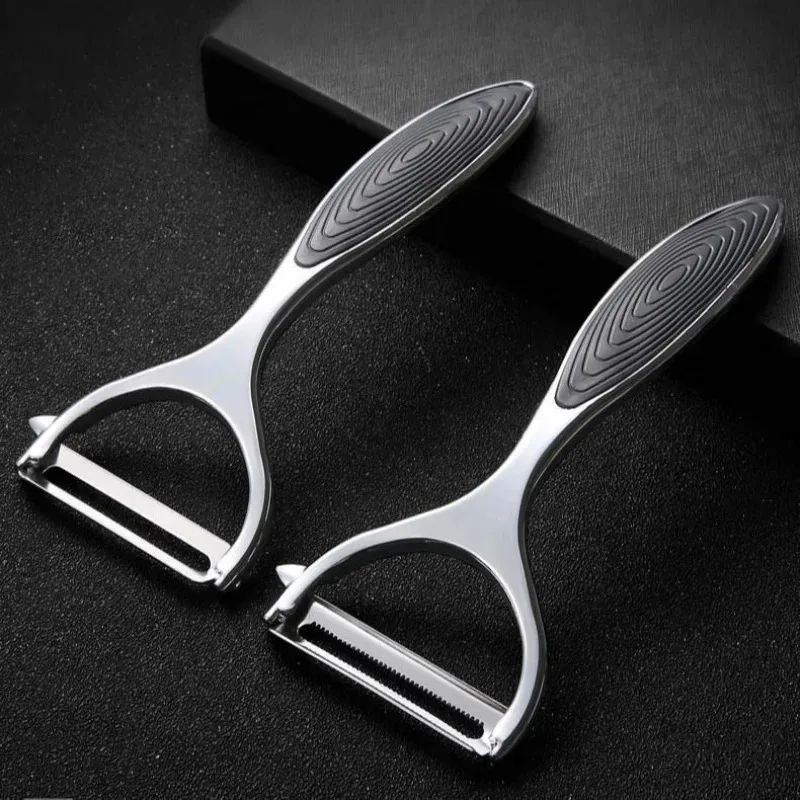
Serrated Blade/flat Edge Peeler Potato Peeler Slicer Knife W

Multifunctional Egg Slicers Stainless Steel Slicer Fancy Spl
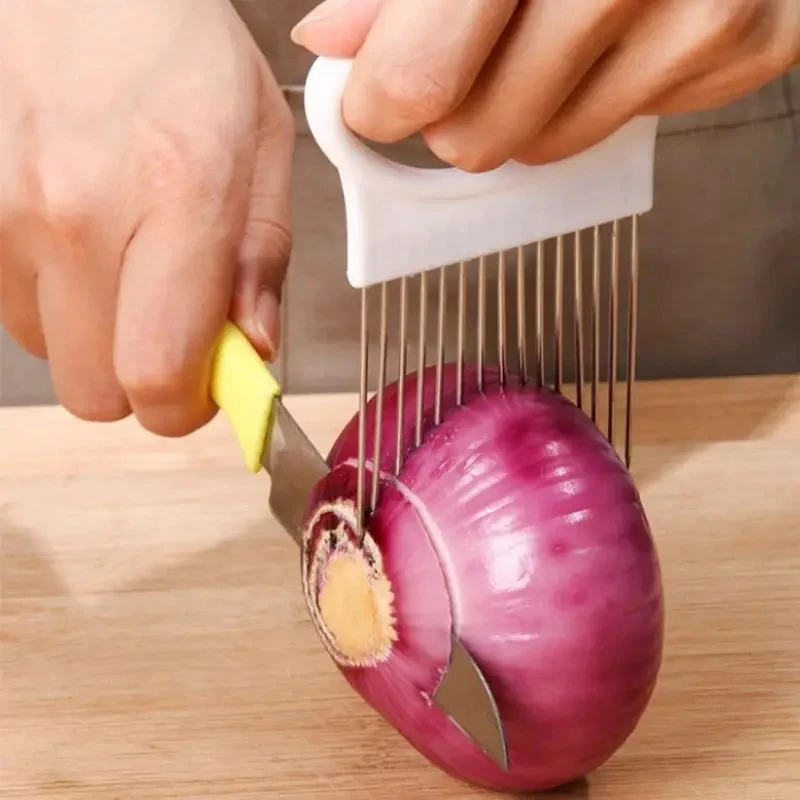
Stainless Steel Onion Cutter Holder Food Slicers Assistant T
The Watermelon Windmill Cutter: A Summer Savior or Drawer-Bound Dud?
The scene is a summer rite of passage: a daunting, gorgeous watermelon awaits its fate on your cutting board. You brace yourself for the inevitable—the slippery wrestling match, the rogue seeds, the river of juice threatening your clean countertops. Twenty minutes later, you’re left with a pile of haphazard chunks and a simple question: isn’t there a better way?
Enter the Watermelon Windmill Cutter, a gadget that promises to turn that messy chore into a single, satisfying thunk. But in a world flooded with sleek brand-name kitchen tools and mysterious, ultra-cheap online alternatives, does it actually work? And more importantly, which version is worth your money?
I’m David Bennett, and I’ve tested them all—the good, the bad, and the rickety—to find out if this tool deserves a spot in your summer arsenal, or if you should just keep battling it out with your trusty chef’s knife.

How It Works: No Magic, Just Clever Mechanics
First, let’s demystify it. A watermelon windmill cutter isn’t a complex device. Imagine a circular base with a central tower. From that tower, curved stainless steel blades radiate outward like the spokes of a wheel—or the blades of a windmill.
The process is simple: place a halved watermelon (cut-side down) on the base, press down on the handle, and twist. The blades sweep through the flesh in one smooth, rotating motion, segmenting the entire half into neat, uniform slices or chunks. The promise is threefold: speed, uniformity, and contained mess. The rind acts as a natural bowl, trapping the juice and chaos.

The Great Divide: Brand-Name Precision vs. Bargain-Bin Grit
This is where the real story lies. After testing cutters from both worlds, the differences are stark and telling. To help you navigate, I’m highlighting five distinct models that embody the spectrum of what’s out there.
The Branded Camp: Engineered for Joy
Branded models, like those from established kitchenware companies, are built with a focus on materials and user experience.
- The Culinary Architect ProSlice 3000: This is the premium contender. It feels substantial in the hand, with commercial-grade, coated stainless steel blades and a ball-bearing swivel mechanism that makes the twist action feel impossibly smooth. It’s the tool for the serious entertainer who demands flawless results every time.
- Harvest Kitchen EvenSlice Deluxe: A fantastic mid-tier option. It offers excellent heft and performance with thoughtful ergonomics, like oversized, non-slip silicone feet that actually hold during use and a comfortable, grippy handle. It delivers 95% of the premium performance at a more accessible price point.
These tools share a philosophy: predictable excellence. The blades are uniformly sharp, the mechanisms are robust, and the result is a platter of geometrically perfect watermelon slices. You’re paying for frictionless performance and durability that will last through countless summers.

The AliExpress & Generic Realm: A Roll of the Dice
On platforms like AliExpress, you enter a world of variability. You’re not buying a specific brand; you’re buying a type of tool. Based on my testing, they generally fall into three categories:
- The "Surprisingly Adequate" Basic Cutter: For about $15, you get a functional tool. The metal is thinner, the plastic might feel light, but on a standard melon, it works. The twist is rougher and may require more muscle, but it gets the job done. Think of it as a season or two rental.
- The "Looks Can Be Deceiving" Chrome-Plated Model: Often photographed to look premium, these can be the most disappointing. The shiny finish chips, the plastic handle develops hairline cracks under pressure, and the blade sharpness is wildly inconsistent, leading to ragged cuts and frustration.
- The "Why Is This So Big?" Oversized Novelty: Some generic models are comically large, with overly complex blades meant to create tiny cubes. They are difficult to store, harder to clean, and often overpromise on versatility. They highlight the unitasker problem at its worst.
The generic experience is defined by acceptable risk. For occasional use, the cheapest option might suffice. But you risk blade dullness, mechanical failure, and the annoyance of incomplete cuts—the very problems you bought the tool to solve.
The Unvarnished Verdict: Weighing the Real Pros & Cons
Why You Might Actually Love This Thing:
- Blazing Speed: It transforms a 15-minute task into a 60-second one. For party prep, this is a legitimate game-changer.
- Perfect Presentation: Uniform slices or chunks are ideal for platters, skewers, and fruit salads. It looks pro with zero skill.
- Contained Chaos: The "rind bowl" method genuinely contains about 90% of the juice mess, a major clean-up win.
- Simple Fun: There’s an undeniable, visceral satisfaction in the smooth rotation and final release of perfect slices.
The Inconvenient Truths:
- The Ultimate Unitasker: It cuts watermelon halves. While some try it on other melons, results are mixed. It’s a cabinet space commitment for a single job.
- Storage Hassle: It’s big, awkward, and those blades are not drawer-friendly. You need a plan for it.
- The Cleaning Paradox: While it contains the melon mess, washing the gadget itself is a chore. Cleaning sticky juice from between multiple blades isn't for the faint of heart.
- Size Isn’t Adaptive: An unusually large or small melon can stump it, leading to wasted fruit or manual finishing work.
David’s Hot Take: The Controversial Core
Here’s my straight-talking opinion.
For most casual users, the cheapest generic cutter is functionally "good enough." If you just want to survive two summer BBQs without a knife fight, a $15 tool will probably do the trick. The performance gap, while real, isn’t a deal-breaker for occasional use. The risk is it becomes a single-season souvenir.
However, choosing a well-made branded cutter is a vote for a frictionless summer. It’s for the person who views watermelon not as an occasional treat, but as a weekly staple for hydration, snacks, and entertaining. For that person, the superior ergonomics, guaranteed performance, and long-term durability aren’t a luxury—they’re a logical efficiency upgrade. The real waste isn’t the $50 tool you use every week; it’s the $15 tool that fails when guests are arriving and sours you on the whole idea.
Your Decision Matrix: Which Path is Yours?
Go Branded (like the ProSlice 3000 or EvenSlice Deluxe) if:
- Summer for you means frequent, effortless entertaining.
- You value tools that feel solid and perform flawlessly on demand.
- You have the storage space for a specialty item.
- Your philosophy is "buy once, cry once."
Go Generic if:
- Your watermelon consumption is purely seasonal and occasional.
- Your budget is the primary driver.
- You're okay with a "try it and see" approach, accepting potential quirks.
- You won’t be devastated if it only lasts a season or two.
Stick with Your Chef’s Knife if:
- Your kitchen drawers are already a battle zone for space.
- You find the process of knife work therapeutic and precise.
- You demand maximum versatility from every tool you own.
What’s Next on the Chopping Block
The watermelon cutter is a fascinating case study in kitchen gadget evolution. But does the principle hold for other fruits? Our next deep dive is already in progress: we’re putting the pineapple corer-slicer through its paces. Is it a tropical miracle worker, or just another sharp, single-use liability? We’re sourcing both high-end and bargain-bin models for a definitive, juicy showdown.
The Bottom Line: The Watermelon Windmill Cutter absolutely works. It delivers fast, uniform slices with less mess. The debate isn’t about function—it’s about value, frequency, and your tolerance for risk. Choose the path that matches your summer rhythm.
Now, if you’ll excuse me, I have a mountain of geometrically perfect watermelon to attend to. The only remaining question is salt or no salt? But that, my friends, is an investigation for another day.
Stay sharp, and be sure to bookmark this page. We’ll update it with our full pineapple corer ratings and buying guide as soon as the testing is complete.
— David Bennett
High Quality Stainless Steel Potato Cucumber Carrot Grater J
Serrated Blade/flat Edge Peeler Potato Peeler Slicer Knife W
Multifunctional Egg Slicers Stainless Steel Slicer Fancy Spl
Stainless Steel Onion Cutter Holder Food Slicers Assistant T
What we liked
- Saves significant time compared to manual cutting with knives.
- Produces neat, uniform slices or chunks, reducing mess in the kitchen.
- Easy to use with minimal effort, often requiring just a push or twist.
- Can enhance food presentation, making it ideal for gatherings and summer events.
- Durable construction in many models, suitable for repeated use.
What could be better
- Bulky design may take up valuable storage space in kitchens.
- Limited functionality—primarily designed for watermelons, not versatile for other fruits.
- Potential difficulty with oversized or irregularly shaped watermelons, leading to incomplete cuts.
- Higher cost compared to basic kitchen knives, which might not justify occasional use.
- Requires cleaning multiple parts, which can be tedious after use.
Gallery

Top Picks For You
We've curated these high-rated options matching What is a Watermelon Windmill Cutter? Does it Really Work? based on quality and value.
Serrated Blade/flat Edge Peeler Potato Peeler Slicer Knife W
Multifunctional Egg Slicers Stainless Steel Slicer Fancy Spl
Stainless Steel Onion Cutter Holder Food Slicers Assistant T
High Quality Stainless Steel Potato Cucumber Carrot Grater J
Level Up Your Shopping Game
Join 14,271+ smart shoppers who get our exclusive guides and honest reviews delivered weekly.
No spam ever. Unsubscribe with one click.
In this Article
Reading time: approx. 8 min


